Date Published: 2026/04/08
Read Time: mins
A boat owner’s guide to insurance: Questions and answers
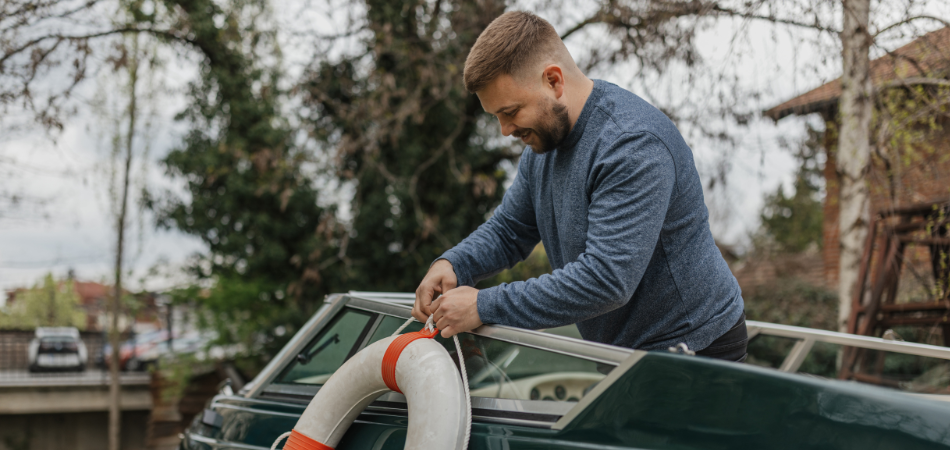
Owning a boat is more than a hobby; it’s an investment and a passion for unforgettable experiences on the water. But with adventure comes responsibility, and navigating the world of boat insurance can feel overwhelming, whether you’re a seasoned captain or just starting your journey.
This guide is designed to answer the most pressing questions boat owners have about insurance, helping you protect your vessel, your finances and your peace of mind. Read on to discover expert insights, practical tips, and the coverage details every boat owner should know before making a decision..
How much liability coverage do I need for my boat?
We recommend a $3 million liability to ensure you have enough coverage should the unexpected occur. There are also two things to consider when thinking about liability coverage:
- If you are mooring your watercraft at a marina, what is the liability limit they require? Marinas typically require a minimum amount of liability insurance for boats stored or docked on-site, protecting both the marina and fellow boaters in case of accidents, injuries, or property damage. Always confirm your marina’s specific requirements and make sure your policy meets or exceeds them for peace of mind while your boat is moored.
- Where are you using your boat? Is it a small private lake with little traffic, or a very busy lake? This question is important because where and how you use your boat directly affects your insurance needs and risk level. On a quiet, private lake with minimal traffic, there’s a lower chance of accidents or collisions, which may require less coverage. However, busy lakes or waterways with heavy traffic increase the risk of incidents like collisions or injuries. Insurance providers factor these conditions into your premium and coverage options. Knowing your boating environment ensures you have protection suited to your specific risks.
Am I covered while trailering my boat?
When it comes to trailering your boat, it helps to separate the two key parts of most marine insurance policies: physical damage and liability. In most cases, your marine policy covers damage to the boat while it’s on the trailer, while your auto policy responds to liability claims.
For example, if someone rear-ends you while you’re towing and your boat is damaged, your marine policy would typically apply. If your trailer sideswipes another vehicle and causes damage, your auto policy would typically provide the liability coverage.
What is emergency towing coverage?
When unexpected issues arise on the water, such as mechanical problems, running out of fuel, or needing urgent repairs, having towing coverage included with your policy can make all the difference. Many boat insurance policies offer reimbursement for a range of emergency services, ensuring you’re supported when you need help the most. These services typically include:
- Professional towing of your boat from where the issue occurs to the nearest repair facility so that you can get back on the water sooner.
- Convenient delivery of fuel or essential repair parts right to your location, with the cost of the fuel included in your coverage.
- Coverage for emergency labour performed at your location, helping to resolve problems quickly and minimize disruption to your plans.
Can I use my boat for watersports? What happens if someone gets hurt?
Make sure to check if Watersports Liability is included in your policy. Some boat insurance providers in Canada don't offer this coverage, while others may only provide it for certain types of vessels. Always confirm whether this protection applies to you and your boat. Additionally, review the insurance limits for this coverage. We recommend carrying at least $1,000,000 in coverage, though $3,000,000 is preferable for greater peace of mind.
Can I winterize my boat myself?
Some people choose to winterize their boats themselves. However, keep in mind that unless the vessel was professionally winterized, coverage is excluded for any loss, damage, or expense caused by freezing during the lay-up period. Make sure to keep any receipts for work performed by a certified marine mechanic or at a marina. Here’s an article on winter storage best practices.
Does my boat insurance policy include wreck removal and accidental pollution liability?
If your boat is in an accident, or sinks, and leaks oil or gas into the waterway, you are not only responsible for the recovery of your boat but also for the environmental clean-up unless coverage is provided under your insurance policy. It is a good idea to carry at least $1,000,000 in coverage; however, $3,000,000 would be preferable. Our policies can include up to $3,000,000 coverage for environmental liability, including wreck removal.
Does my boat insurance policy cover emergency towing?
Emergency towing is a nice coverage to have included on your policy. It provides a little extra peace of mind, knowing that if you become stranded, compensation is available for some or all of your costs. Some boat insurance policies automatically include this coverage; sometimes it must be added separately, and some companies don't offer it. At Orbit, we can include up to $5,000 in coverage for on-water emergency towing, as we recognize the convenience and relevance of this coverage.
If I choose not to lock up my boat or trailer, or I forget one day and my boat is stolen, will it still be covered?
Some insurance providers include ‘Lock Warranties’ or ‘Theft Restrictions’ in their policies, which set specific requirements for theft coverage. These may require your boat to be locked in a particular manner, stored in a locked facility, or show signs of forced entry for coverage to apply. Be sure to ask your broker about these conditions when getting a quote. Regardless, it's essential to protect your vessel as much as possible, and we recommend taking every precaution to prevent theft.
Who can drive my watercraft?
Drivers do not need to be listed on the policy. Anyone who is legally eligible to operate the watercraft and has your permission, can operate the vessel. Any exception to this will be listed on your policy. Ask your broker for more information.
If I hit a rock and damage my lower unit, do I get new parts, aftermarket or rebuilt parts to fix it?
Not all insurance providers will replace your old parts with new ones after a loss occurs; many will repair/replace with aftermarket or rebuilt parts. When obtaining quotes, it's always a good idea to ask about the ‘Basis of Claim Settlement’ clause to verify what your insurer will provide for you.
If something happens to my boat, how much compensation will I receive?
It's important to verify the policy type with your insurer. There are two kinds of policies available: Actual Cash Value and Agreed Value. These terms refer to how the insurer will calculate the maximum payout in the event of a loss.
Actual Cash Value means that the insurer will apply depreciation to the replacement value of the vessel to determine the maximum settlement amount, so you may not receive the full value listed on your policy. To determine the depreciated amount, the insurance company will consider all of the following:
- Condition of the vessel immediately prior to the damage
- Re-sale value of that vessel
- Normal life expectancy of the vessel
Agreed Value means that the insurer agrees to pay the full value listed on your policy declarations page in the event of a total loss; depreciation will not be applied. An Agreed Value policy is the better option and provides you, the insured, with peace of mind knowing that your investment is protected.
What happens if another boater hurts you and they don’t have insurance?
Boat Insurance is not mandatory in Canada, and as a result, there is a higher chance of injury caused by an uninsured vessel because people simply don't purchase it. Without having uninsured boater coverage on your policy, any compensation for your injuries would be limited to the monetary worth of the individual who injured you.
This could lead to very little compensation for your injuries, you having to pay for your own medical expenses, or worse yet, you could be left without an income if you are unable to return to work. If the uninsured boater coverage is included on your policy, you would have coverage up to the limit stated on your policy declarations page.
What is the difference between agreed value and actual cash value?
Actual Cash Value and Agreed Value are terms that refer to how your insurance provider calculates a loss settlement. Actual Cash value means that the insurer will apply depreciation to the replacement value of the vessel to determine the maximum settlement amount, so you may not receive the full value listed on your policy.
To determine the depreciation amount, the insurance company will consider all of the following:
- Condition of the vessel immediately prior to the damage
- Re-sale value of that vessel
- Normal life expectancy of the vessel
Agreed Value means that the insurer agrees to pay the full value listed on your policy declarations page in the event of a total loss; depreciation will not be applied. An Agreed Value policy provides you with peace of mind knowing that your investment is protected.
Will filing a claim on my boat insurance impact my other policies, such as my home insurance?
A standalone marine insurance policy is typically not attached to a home insurance policy or written as an extension of the home policy. If a claim occurs, it won't affect your home insurance policy.
At Orbit Insurance Services, we are marine insurance experts, and when you purchase a policy through our office, you get a specialized product tailored to boaters' needs.
Request a quote from one of our specialized marine insurance brokers. They will help ensure you get the best coverage for your needs. Whether you're a seasoned boater or a first-time owner, our experts ensure you have the peace of mind to enjoy your time on the water.
-Home.svg?ext=.svg)
-Auto.svg?ext=.svg)
-Travel.svg?ext=.svg)


-Home.svg?ext=.svg)
-Auto.svg?ext=.svg)
-Boat.svg?ext=.svg)
-Business.svg?ext=.svg)
-Collector.svg?ext=.svg)
-Prize-Indemnity.svg?ext=.svg)
-Motorcycle.svg?ext=.svg)
-RV-Class-A.svg?ext=.svg)
-RV.svg?ext=.svg)
-Travel.svg?ext=.svg)

